Search

Amy F. Quincy Author/Freelance Writer

Tag

writing

Remembering Amy

by Emory Clements

I lost a dear friend last weekend. Because it was unexpected, many of her friends are still reeling. But we came together last week, not for a service exactly, but a gathering of sorts, a service before the service.

While there, what struck me most was, while I knew very few people, I wasn’t the only one. Everyone there, it seemed, didn’t know anybody else. This beautiful person had touched so many lives — and most of them in random ways. So-and-so met so-and-so on eHarmony or in a class, and that someone knew a neighbor of Amy’s who turned out to be somebody else’s realtor. And so it went. I met Amy several years ago at a self-improvement workshop that neither of us particularly cared for. We joked that the best thing to come out of it had been our friendship. The assortment of people that arrived last Tuesday may not have known each other, but it all led back to Amy.

Her short-time love (that they weren’t yet married is just a technicality in my book) spoke of two words Amy associated with herself — creativity and connection. Someone else spoke about how, upon hearing the news, her best friend was prompted to say “I love you” to her for the first time in over twenty years. I had similar experiences. Friends, those I see all the time and those I hadn’t heard from in months or years, reached out to me. Connections are important. The lesson I left with is to tell the people you care about that they matter.

On the way home, another good friend of Amy’s mentioned that Amy’s easel was still at his house. They had taken an art class together. Amy had gotten bored. She didn’t have the attention span for it. He, on the other hand, was on to something. He showed me some paintings on his phone. They were good.

As a creative person myself, I feel certain that Amy has left it to me to encourage him. This is a role I gladly accept. I think everyone has the potential to be creative or do something that makes a difference, something they feel passionate about. We differ only in how much we’ve actualized or stifled this natural urge.

When I considered writing this blog, I hesitated. Was it selfish of me to write about something so personal? About losing a person most of my readers don’t even know? And then I remembered: that’s the magic of writing. When done well, it makes you feel. There’s something in it that the reader can relate to. So, it doesn’t really matter if you knew Amy or not. I write what’s personal to me and you can connect to it through something personal to you. Magic.

And so, I find that this giving friend of mine keeps on giving. And I simply pass on the message. Creativity and connection. Do with that what you will.
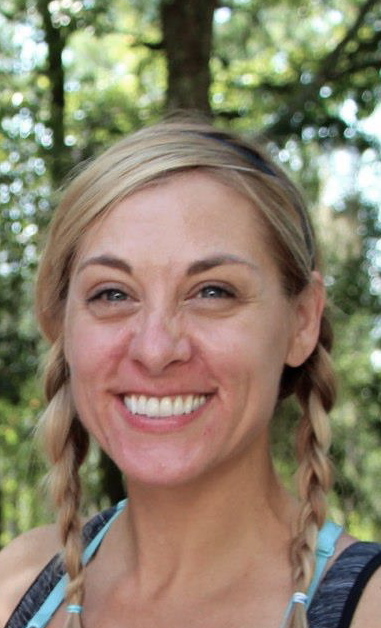
Amy Louise Hyler
1966-2012

The Desire

I’m in line at a book signing with my writing pal, Mary. When it’s our turn, Mary asks the author a question he must have answered a million times. “Do you write every day?”

He doesn’t hesitate, “Yes.”

What were we expecting? The general consensus on the subject seems to be that writers should write every day. I think we were looking for a way out of it.

In her book, Becoming a Writer, Dorothea Brand  suggests giving yourself an absolute, non-negotiable 15 minutes a day to start. She then states, in unequivocal terms,”If you fail repeatedly at this exercise, give up writing.” Ouch. She goes on to explain that, for those people, their resistance is actually greater than their desire to write.

I know I would pass the test. I know I would. My desire to write is definitely greater than my resistance. Look, I churn out this blog every week — no excuses. So why is committing to a daily practice such a struggle?

Well for starters, Dorothea Brand is not in my living room. Sure, I get up way before the sun every day with the intention of writing. And most days I do. But some mornings I just return emails. So no, I’m sure I’m not writing every single day.

See, there’s no one hanging over me, waiting for my daily allotment of words to be produced. It does help greatly to be held accountable. Hence, the successful regularity of this blog.

Stephen King writes 2,000 words a day. Anthony Trollope, one of the most prolific English novelists of the Victorian era, wrote three hours a day, every day. Jack London wrote 16-18 hours a day and produced 50 books in 16 years. He also killed himself at the age of forty.

I prefer to hear about Judith Viorst who writes for children and adults by setting a goal of a page a day. She can get ahead, but never fall behind. So when she’s cranking out pages, she can take a few days off. I’m spending all day Friday writing this so I can take the rest of the weekend off for a visiting friend. I think this kind of on again, off again affair with writing worked for Hemingway. You hear about his writing for three to four hours every day, but in his letters he mentions easing off those months when the fishing was good.

And if you’re a writer not writing, prepare to pay in guilt. Gloria Steinem said, “Writing is the only thing that … when I’m doing it, I don’t feel that I should be doing something else instead.”

My writing coach encourages us to write every day. She gave us a nice quote by somebody I can’t remember and whose words I’m paraphrasing, but it went something like this. If someone told you that inspiration (spirit, muse, an angel) was going to show up near your house on a rock at ten o’clock, wouldn’t you go to that rock every day and wait?

I would. And so, I’ll keep heading to my desk long before I hear the first seagull outside. I’ll continue to set my alarm even though sometimes, I confess, I go back to sleep. Keep striving for the solution that works for you. Remember, if your desire outweighs your resistance, you’re a writer. You’ll find a way. Just don’t give up.

Happy Blog-versary!

Plan more than you can do, then do it.

Bite off more than you can chew, then chew it.

Hitch your wagon to a star, keep your seat, and there you are.

~Unknown

                                                                                                                                                                       I first heard the term “blog-versary” when a writing pal, Mary, celebrated the five year mark of her blog, Random Thoughts. Five years. I can’t even fathom.

I started this blog roughly one year ago, against all wise advice to the contrary. I had, still have, a book to finish. I’m sure I’d have been finished by now if I wasn’t spending half my writing time here. More really, if you count thinking time (and I do.) My biggest struggle has always been the thinking, dreaming up ideas. One year. That’s 52 blog topics to come up with.

Luckily, I never looked at it that way. I just jumped in. I think that’s what you have to do. Don’t dip your toe in to find out the water is freezing or you’ll stand there shivering in dreaded anticipation. Just jump. Don’t think about it too much. Or fear may stop your forward progress. Have a little faith.

You’ve heard it before. Leap and the net will appear. I love that.

I also love this quote about writing by E.L. Doctorow that can be applied to any risk-taking in life. “Writing a novel is like driving a car at night. You can see only as far as your headlights, but you can make the whole trip that way.” Writing a blog is like driving a car at night, too. When things are flowing smoothly, I have topics planned two or three weeks ahead. It gets more nerve wracking during the week before a Sunday when I haven’t a clue.  For example, when I wrote the post “Material,” I had no idea what to write about until my wheelchair fell off the back of Mom’s jeep a few days prior. See? No use worrying. I should’ve had faith that this little disaster would occur.

The commitment of a weekly deadline has got me thinking like a writer. I go through life always on the lookout, always observing, trying to see the humor in any situation. That’s not a bad way to go through life. I’m also more likely to accept an invitation or take a risk because at the very least, I may get a blog post out of it.

There are other benefits, too. (Writers, listen up.) It’s great practice. You can fine-tune technique, work on style, or find your voice. And no one can deny there’s great satisfaction to be had in building an audience. Last week, I had someone subscribe to my blog in Thailand. Thailand. How cool is that? It feels a bit too presumptuous and egotistical calling you all fans, so I’ll call you my loyal readers. And your number is growing.

So, don’t worry about where the money is coming from, just plan the vacation. It doesn’t make sense to stop painting the picture because you don’t know where you’ll hang it. And don’t stay at that dead-end job just because you don’t have another one. Oh wait — that one’s sound. But you get the idea. Just leap.

Material

Just as I began to wonder what on earth my next blog post would be about, my wheelchair fell off the back of our Jeep in rush-hour traffic.

My mom and I were heading to Best Buy for a new T.V. My heavy, corner-unit Samsung didn’t owe me anything and to prove it, had started showing me a fun-house-mirror picture in miniature. My mother was thrilled. She’d been after me for some time to get with the 21st century and get a flat-screen, but T.V.’s are like cars in my book — I prefer to run them into the ground.

That my mom was driving “in-town” in the first place was kind of my fault. I’m the one who decreed “beach driving only” (not that she ever listens to me.) I’ve been arranging for other rides a lot lately, but this particular trip seemed too good to pass up. Not only did I need the ride, I needed the pixel expertise.

My mother isn’t known for her patience. She can also be a wee bit forgetful. So, when she came to pick me up without the bungee cords that secure my wheelchair onto the outside lift, we decided it would be fine lashed with what looked like an old leash of Frankie’s. I say “we decided” because, having discussed the option of driving back to her house for the bungee cords, both of us shrugged and said “nah.” What could go wrong?

We had just come through an intersection when I heard the series of thumps. “Mom, is the wheelchair okay?” I asked.

She looked in the rear-view mirror. “It’s gone! It’s gone!”

It wasn’t gone. It was dragging by Frankie’s leash down Atlantic Boulevard. Other drivers were flashing their lights. Miraculously, when she hauled it into the back seat from the shoulder, it had suffered only a few cosmetic scrapes.

Sometimes material presents itself.

Having a fresh idea used to be one of the hardest parts of writing. Now, I’m privy to an endless fountain of inspiration. Becoming handicapped is a hell of a trade off, but I’ll take it. I don’t really have a choice.

In his last broadcast, Andy Rooney said something like, any idiot can think up a weekly column. I cringed. Then again, he writes about the crap in his glove compartment and stuff like why-do-I-save-all-these-ketchup-packages.

I recently wrote my life story in 149 words and I dare say my handicap makes my life story more interesting. Something major has happened to me. Disability has its perks? Well, this is one of them. Sorry, writers. Get your own gig. This one’s mine.

Big Rocks First

I would like to dispel this notion that disabled people sit around all day and watch daytime television. When I worked full-time, I would long for a sick day to sleep late, stay in my pajamas and watch The Price Is Right. I still have that dream. Just because I don’t receive a paycheck doesn’t mean I don’t get stressed or have a problem with time management. I do. Okay, maybe I watch an episode or two of HGTV’s House Hunters over lunch, but that’s it. I wake at 5 a.m., “quit” at 5 p.m. and still feel I don’t have enough hours in the day or days in the week.

The problem became apparent in the last few weeks as I tried to juggle writing a weekly blog, finishing a book and walking Frankie every morning and evening. And let’s not forget that when you’re disabled, everything takes longer. Getting a shower, fixing a meal, transferring to my power chair with an excited pooch at my feet. Everything. I can spend a half-hour pecking out just one email!

So, I started researching organization and was introduced to the concept of “big rocks”  from Stephen R. Covey. He wrote the widely popular The Seven Habits of Highly Effective People, first published in 1989. That’s right — 1989. And I’m just now learning about it. Ironic that I never felt the need to be even slightly effective before becoming disabled. (I’d argue that being productive and successful matter more when you’re doing something you love, but that seems like another post.)

Anyway, the idea is to prioritize. Your big rocks are what’s important to you in the overall scheme of things. The big picture. It’s personal. Maybe it’s time spent with family. Maybe it’s giving back — a charity or other service. The point is to get the big rocks in there and not squander away your time on hold with the cable company or reading email jokes.

One of the concepts I picked up during my web surfing is this: you have to follow your compass before you watch the clock. In other words, before you can manage your time, you need to know where you’re going, your priorities and goals. Instead of focusing on what’s urgent, learn what’s important to you. Where you are headed is more important than how fast you are going. Think of the Titanic.  

I thought about my big rocks and came up with three non-negotiables that I simply must make time for. Frankie (if you’ve read some prior posts, you know how much I get out of his walks,) my health (maintaining my current mobility is crucial to my continuing to live independently) and my writing (my passion and purpose.)

As it turned out, that covered two of the seven habits. I don’t know the others yet, so I’m only mildly effective. Habit 3 is putting first things first or prioritizing. In Habit 7, you focus on finding balance between the physical, mental, emotional and spiritual areas of your life. This jives with my big rocks. Physically, I’m taking care of my health and exercise. My mental rock is my writing. And Frankie is a two-for. I cover my emotional needs by having social and meaningful interactions with others (just today I ditched my planned routine and went down to the local coffee shop with him at the invitation of a friend.) I think I successfully cover the spiritual side of things when I commune with nature on our walks and meditate seaside.

What are your big rocks? Think about your compass. And next week, I’ll get into the nitty-gritty of the clock. For now, I’m running out of time to post this.

Keep It Simple Stupid!

 Besides the noble art of getting things done, there is the noble art of leaving things undone.  The wisdom of life consists in the elimination of non-essentials.  ~Lin Yutang

I have no idea who Lin Yutang is (or was,) but he’s a wise man (or woman.)  You see, I created a lot of pressure for myself in trying to write both for my blog and my book. I haven’t figured out how to do both.  When I’m concentrating on one, the other suffers.  So last week, when the juices started flowing for the book, (which I confess, they haven’t done in some time,) I wondered how on earth I would get it all done.

Then my friend (and fellow writer,) Mary, suggested I focus on the book and forget the blog.  At first my inner type A was indignant.  It scoffed at the idea.  And then I thought, yes.  Why not?  Will I get scads of angry e-mails from hundreds of disappointed readers?  I don’t flatter myself that there are that many.  Besides, the purpose of the blog is to familiarize people with my writing so they will buy my book.  So, I finished another memoir chapter and I’m writing this in the final hour.

So much of our stress is self-induced.  Feeling short on time?  Do you really have to make that yoga class a third time this week?  If it’s stressing you out just to get there, you’re kind of defeating the purpose.  Will you or your family have to go naked if you skip the laundry this weekend?  Throw in a load of socks and underwear and be done with it.  Let it go.  You may find, like me, that once you let yourself off the hook, things are much easier to accomplish.  Sometimes it’s not the items themselves on the list that cause the tension, just the fact that there’s a list in the first place.  I’ll try to remember that next week.

Stocking the Pond

“Did you write today?” a well-meaning, non-writer friend will ask me.  This brings all my neuroses and self-doubt to the surface.  My writing coach and mentor has learned to answer the question with,”You mean, did I type today?”  Brilliant.

You see, typing and writing are two different things.  Typing is sitting down to hit letters on a keyboard.  Writing involves thinking.  It can be done anywhere, even miles from a keyboard.  Most folks are of the opinion that writers should write every day.  That’s why I love this distinction.  I don’t type every day.  When a project I’m working on is going particularly well, I do.  But otherwise, I may be doing any number of things.  Like the laundry, walking the dog or re-organizing my fridge.  But, I’m thinking about my writing all the time.  Mulling over a phrase, searching for a word, dreaming up an ending.  I’m here to say: that counts.

Also, the answer will probably come to you in the shower.  Or driving.  Or washing the dishes.  Doing anything routine or repetitive allows the mind to stop thinking logically, or “how-to,” and start thinking creatively.

And the best way to ensure that the perfect phrase, word or ending comes to you is to stock the pond.  I’m talking about “filling the well,” but that’s might be considered a cliche’ to people working in the creative arts, so I’ll use the less often heard “stocking the pond.”  The idea, as explained by Julia Cameron in The Artist’s Way (if you’re a regular reader, you know I’m a fan,) is that writers, poets, artists, or creators in general, use images from experience to serve as a muse for their art.  Creating draws on this well of images.  Life experiences fill it up.

Writer Richard Ford, in his New York Times essay, advises that living life comes first.  Writing second.  In fact, he likes to take large chunks of time between projects to recharge his muse.  This can mean anything from watching daytime television to visiting an amusement park.  Personally, I prefer the latter to the former for stocking the pond.  Like Ms. Cameron, I would advise doing something, rather than nothing.

So, if anyone’s counting, that’s about 350 words for today.  Tomorrow, I’m going to the movies.

Ode to Late Bloomers

I was on the far side of thirty-five before I figured out what I wanted to be when I grew up.  I had stirrings and dreams, yes, but real commitment?  Not until recently.  And I’m forty-one.  That’s why I love stories about late bloomers.  Don’t tell me about child prodigies like Mozart, composing at the age of five.  I would rather forget that Zadie Smith published White Teeth to critical acclaim before she was twenty-six.  People like that don’t inspire me.  So they had clear callings.  Good for them.

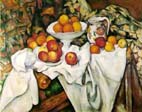
Paul Ce'zanne
Apples and Oranges, 1890s

I’d rather know about the late bloomers.  Those that didn’t know what they wanted from life right away.  Maybe they went back to school for the first time in decades.  Or maybe they toiled away at their craft without much early success.  Like the French Post-Impressionist painter, Paul Ce’zanne.  Though he knew he wanted to be an artist and worked at being a painter at an early age, his work didn’t attract much attention till he was in his fifties. Continue reading “Ode to Late Bloomers”

Sooner Than I Thought

For those of you who don’t know me, my name is Amy and I’m currently working on a book, Misadventures of a Happy Heart: A Memoir of Life Beyond Disability. The working title really tells you a lot about this blog and its categories.  There’s On An Adventure (or misadventure as the case may be,) my perspective on life as a recently disabled person (From Down Here,) and my happy heart (or overall positive outlook.) Continue reading “Sooner Than I Thought”

Website Built with WordPress.com.

Up ↑